💥 Life Back Then vs. Life Today: The Truth They Don’t Want You to See
People say, “Life was harder back then.”
Yes, survival required effort — chopping wood, farming, hauling water.
But families were free, communities helped each other, and life was affordable. Poverty wasn’t criminalized.
🌾 Back Then
- Homes heated with wood stoves
- Food from gardens, light from lamps
- Families raised children without interference
- Mental health stronger, stress from nature
- No Big Pharma pills, healed with herbs
- Taxes minimal; owned land outright
🏙️ Today
- Families rely on overpriced utilities and disposable products
- Authorities use any excuse to label homes “unsafe”
- Mental health collapsing under debt, fear, isolation, and chemicals
- Big Pharma profits from drugs that often make people worse
- Taxes drain every dollar while policies inflate prices on food, fuel, housing, and utilities
- Appliances cost 3–5x more and break in just a few years
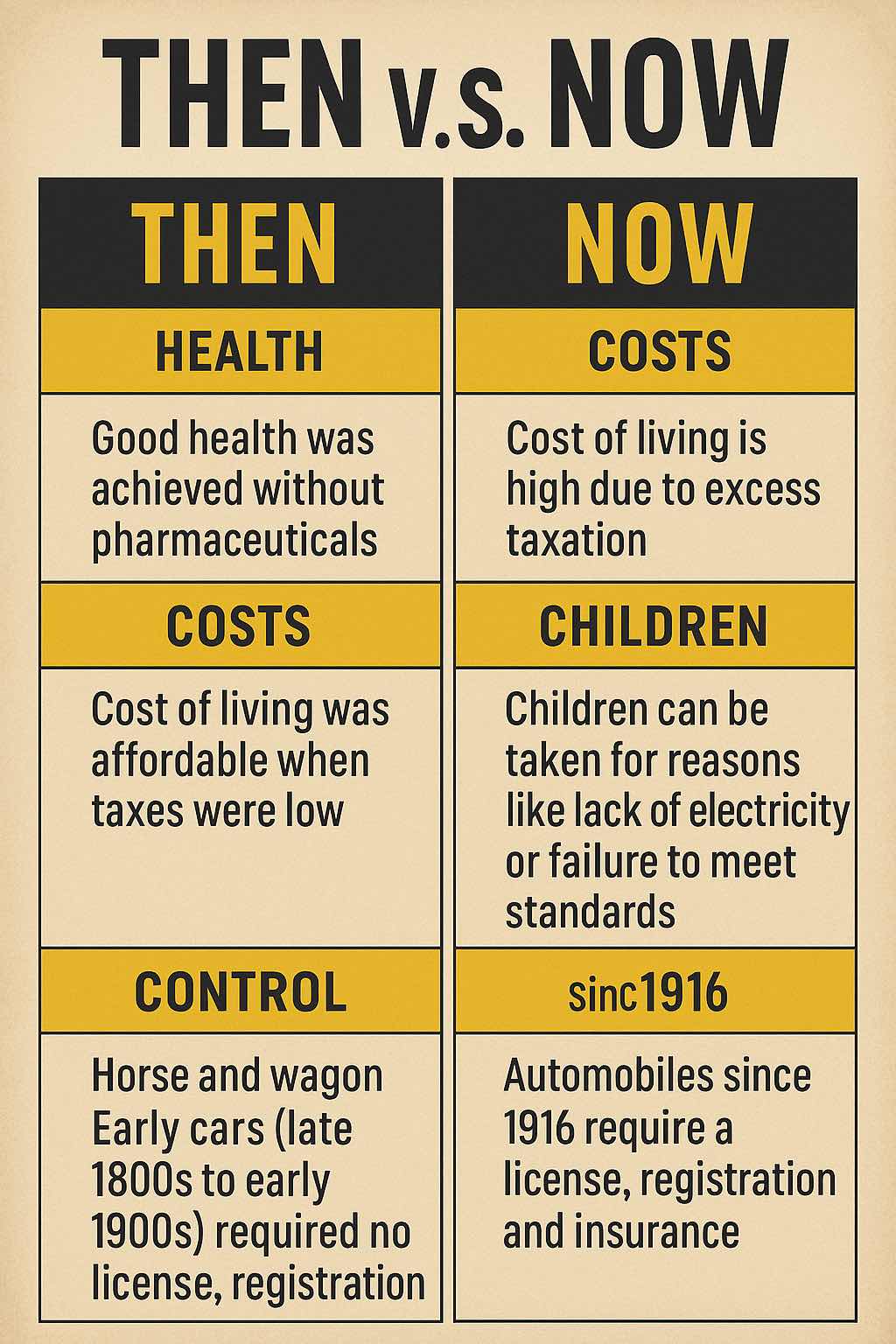
🧼 Real Example: My Washer
- Modern GE washer — agitator fins snapped off twice.
- Replacement part broke within days, proving poor design.
- Older washers from the 80s/90s lasted 20–30 years with simple fixes.
- This isn’t an accident — it’s planned obsolescence to force endless spending.
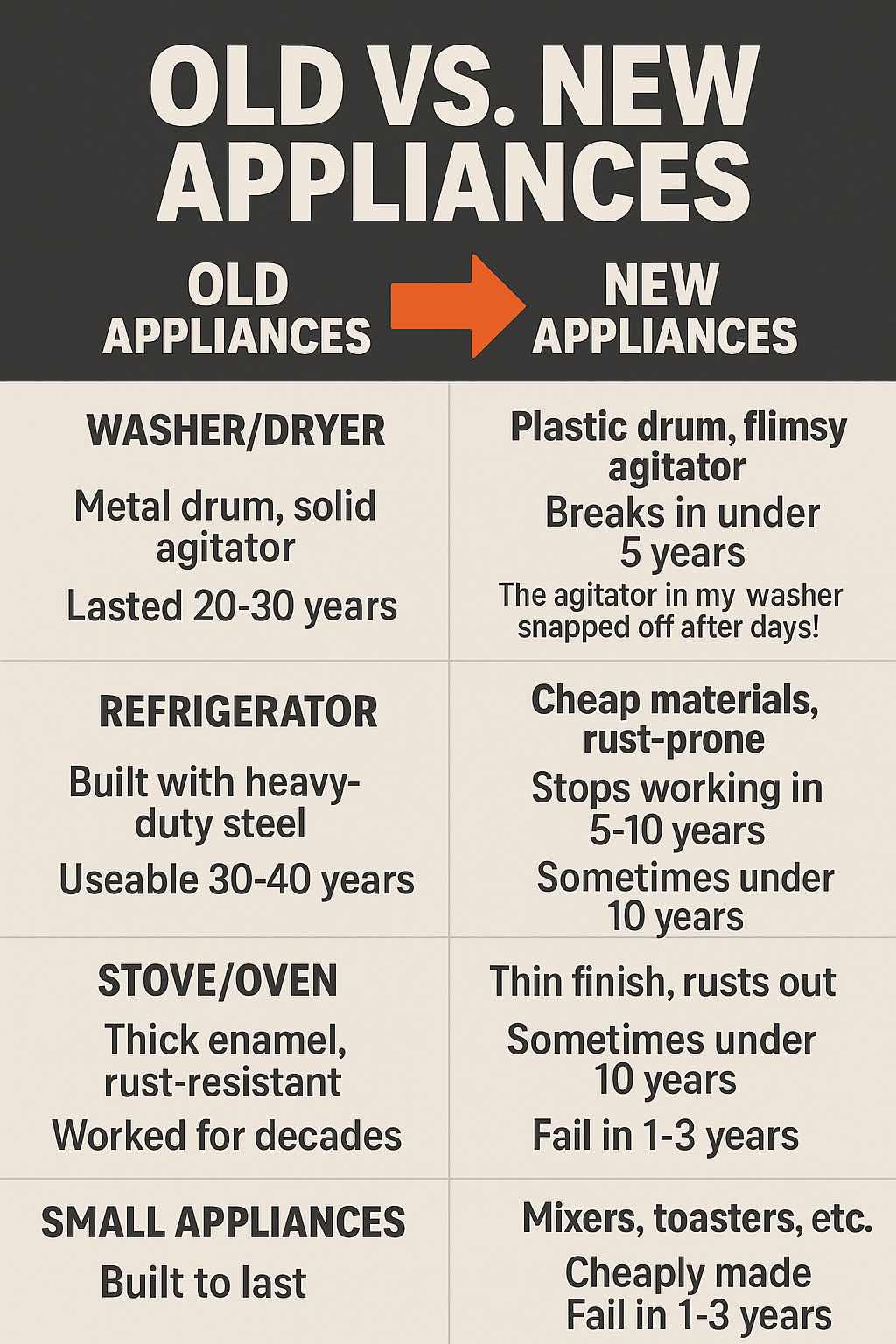
🏠 Old vs New Appliances: Materials, Lifespan & Cost
|
Appliance Type |
Old Appliances (70s–90s) |
Modern Appliances (2000s–Today) |
|
Washer/Dryer |
Metal drums, solid agitators, 20–30 years lifespan. |
Plastic parts, 5–7 years, costly repairs. |
|
Fridge |
Heavy-duty steel, 30–40 years use. |
Cheap materials, rust, 5–10 years max. |
|
Stove/Oven |
Thick enamel, rust-resistant, decades of use. |
Thin coatings, rust holes, under 10 years. |
|
Small Appliances |
Built to last generations. |
Lightweight plastic, fail in 1–3 years. |
|
Phones/Laptops |
Durable, batteries replaceable. |
Fragile, sealed, obsolete in 2–3 years. |
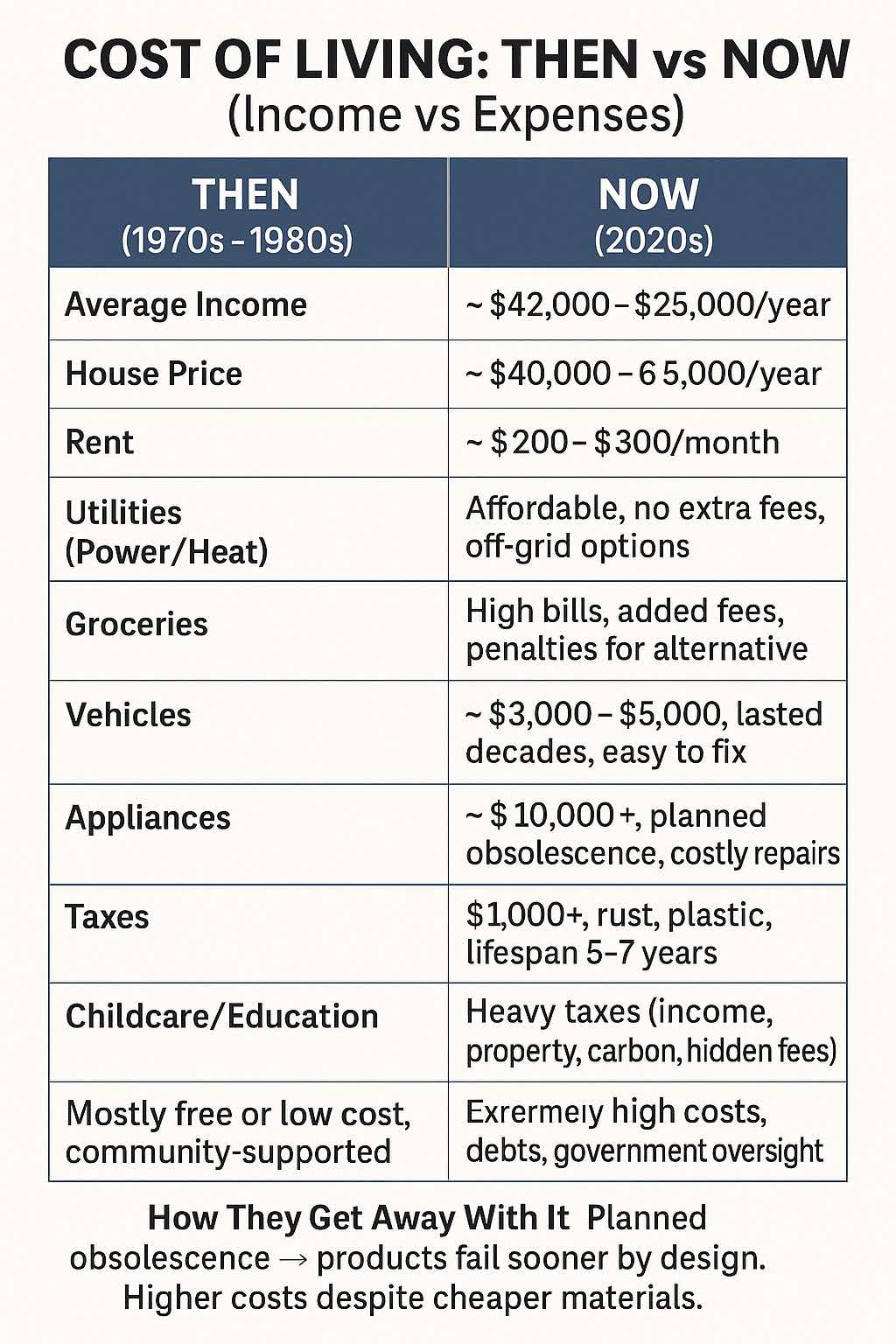
💰 Cost of Living: Then vs Now (Income vs Expenses)
|
Category |
Then (1970s–80s) |
Now (2020s) |
|
Income |
$12K–$20K/year |
$50K–$65K/year |
|
House Price |
$40K (2–3x income) |
$400K+ (6–10x income) |
|
Rent |
$200–$300/mo |
$1,200–$2,000+/mo |
|
Utilities |
Cheap, off-grid options |
High bills, penalties for alternatives |
|
Groceries |
$30–$50/week |
$150–$300+/week |
|
Vehicles |
$3K–$5K, lasted decades |
$40K+, costly repairs |
|
Appliances |
$200–$500, lasted 20–30 years |
$1K+, break in 5–7 years |
|
Taxes |
Minimal, no carbon tax |
Heavy taxes everywhere |
|
Childcare/Education |
Low cost, community-supported |
Extremely high, debt-driven |
✅ Then: Lower wages, but essentials were affordable. Families thrived on one income.
✅ Now: Higher wages, but everything is exponentially more expensive.

🚨 They Cause It, Then Punish You For It
- High Taxes & Inflation → Poverty → Punishment
- Housing Crisis → Homelessness → Criminalization
- Job Losses → Debt & Dependency → Loss of Dignity
- Healthcare Crisis → Delayed Care → Blame on Patients
- Food & Farming Restrictions → High Prices → Fines for Survival
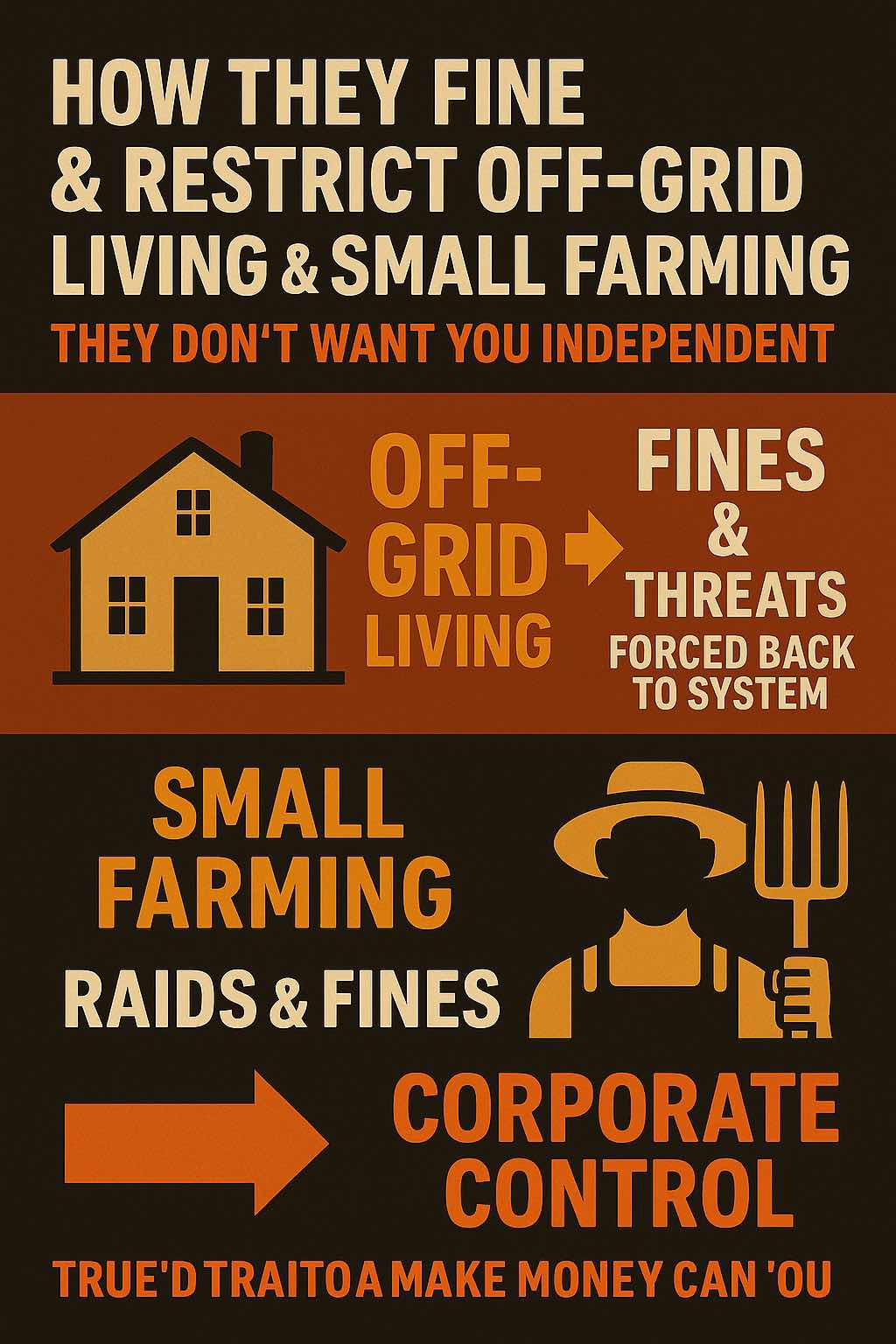
🌱 How They Fine & Restrict Off-Grid Living and Small Farming
Living independently used to be normal — today it’s treated like a crime.
🏡 Off-Grid Living
- Zoning & Codes: Homes must stay tied to utilities or risk being declared “uninhabitable.”
- Permits & Fines: Rainwater collection, compost toilets, solar without permits bring penalties.
- Cases: Families have been fined and forced to reconnect to grids despite functional setups.
🚜 Small Farming
- Livestock Restrictions: Backyard animals often banned, violations bring fines or forced removal.
- Regulations: Farmers face heavy codes on water, manure, raw milk — failing to comply leads to penalties.
- Examples: Amish farmers and independent homesteaders raided for non-compliance; Ronald Greene’s case shows how raids crush small farms.
💥 Why They Do It
- To force dependency on corporate utilities and industrial food.
- To generate revenue through fines and fees.
- To control self-sufficient people and keep them within the system.

🧠 Mental Health: Then vs Now
- Back Then: Stress came from nature and survival, solved through action, community, and faith.
- Today: Stress comes from debt, taxes, media fear, and chemical dependence.
- Big Pharma’s Role: Labels emotions as disorders, sells pills that worsen symptoms and create lifelong customers.

🐴 Transportation: Then, Now, Control
- Horse & Wagon: No licenses, no inspections, no insurance.
- Early Cars: Free travel, no regulations.
- Today: Driver’s licenses, inspections, emissions tests, and fines for unsanctioned travel.
💥 Conclusion
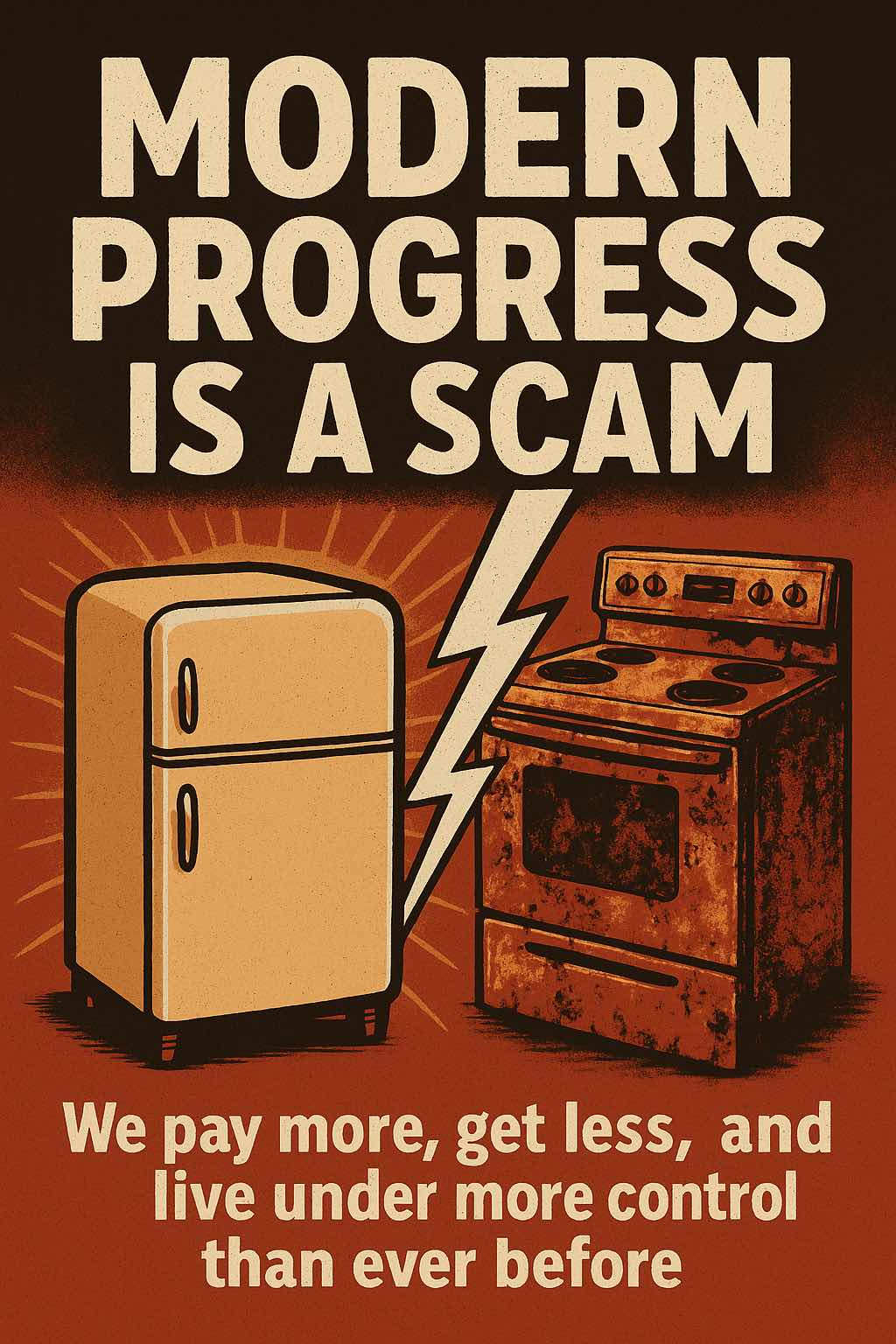
Modern “progress” is not progress.
We pay more, get less, and live under control disguised as convenience.
Back then, life was harder physically but easier financially and emotionally.
Today, life is harder in every way — because they made it that way.


Comments
Post a Comment